Valley of Flowers Trek with Hemkund Sahib


BOOKING
Trekking Fee
INR 7499/-
Per Person
Select Date
Adult
Minimum 2 people required for this trek
Highlights of the trek
Valley of Flowers & Hemkund Sahib : The Uttarakhand Journey That Rewires You From the Inside Out
Some Places Don't Just Impress You. They Permanently Change What You Consider Beautiful.
There's a moment on the trail to the Valley of Flowers — somewhere between the last tea stall at Ghangaria and the first real view of the valley floor — where the landscape does something unexpected.
It doesn't announce itself. There's no dramatic reveal, no sudden clearing where everything opens up at once. Instead, it happens gradually, the way a piece of music builds — a few wildflowers on the trail edge, then more, then suddenly you're standing in the middle of a UNESCO World Heritage Site that looks less like a real place and more like something a particularly ambitious painter invented after a very good dream.
The Valley of Flowers doesn't compete with other Himalayan destinations. It exists in an entirely different category — one that combines ecological rarity, spiritual proximity, and visual spectacle in a way that no single trek in India quite replicates. And in 2026, with global adventure travel increasingly prioritizing meaningful, ecologically significant destinations over manufactured experiences, this 87-square-kilometer floral paradise in Uttarakhand's Chamoli district has never felt more relevant, more necessary, or more quietly extraordinary.
This is the complete, honest, up-to-date guide — written for global travelers, Indian trekkers, spiritual seekers, botanists, photographers, and anyone who has ever looked at a mountain photograph and felt an unnameable pull toward it.
What Exactly Is the Valley of Flowers?
The Context You Actually Need
The Valley of Flowers National Park — locally known as Phooloon Ki Ghati — is a high-altitude Himalayan valley located in the Chamoli district of Uttarakhand, India. It sits at an elevation ranging from 3,352 to 3,658 meters (11,000 to 12,000 feet) and stretches approximately 8 kilometers in length and 2 kilometers in width, cradled between the ridges of the Zanskar and Great Himalayan ranges.
What makes it genuinely exceptional — not just in India, but globally — is the density and diversity of its floral ecosystem. Over 500 species of wildflowers have been documented within the valley, including species found nowhere else on earth. The valley floor transforms into an uninterrupted carpet of color during the monsoon bloom season between July and September — a biological event so visually dramatic that it has drawn botanists, naturalists, and travelers from across the world since British mountaineer Frank Smythe first documented it for a global audience in 1931.
In 1982, the Indian government designated it a National Park. In 2005, UNESCO inscribed it as a World Heritage Site as part of the Nanda Devi Biosphere Reserve — a recognition that places it among the most ecologically significant protected areas on the planet.
That context matters. This isn't just a pretty meadow. It's a living ecological archive.
The Geography: Where It Is and Why That Matters
- Country: India
- State: Uttarakhand
- District: Chamoli
- Nearest Town: Joshimath (95 km)
- Base Camp Village: Ghangaria (also spelled Gangaria) — 3,049m
- Trek Starting Point: Govindghat
- Valley Entrance Elevation: 3,352m
- Valley Highest Point: Approximately 3,658m
- Distance from Rishikesh: ~295 km
- Distance from Delhi: ~500 km
- Distance from Dehradun: ~295 km
- GPS Coordinates: 30.7283° N, 79.6050° E
- UNESCO Status: World Heritage Site (Nanda Devi Biosphere Reserve, 2005)
- National Park Status: Designated 1982
- The valley sits in the upper Pushpawati River basin — a tributary of the Alaknanda — and is accessible only on foot from the road head at Govindghat.
This enforced remoteness is part of what preserves it. There are no roads into the valley, no permanent structures inside it, and no overnight camping permitted within its boundaries — regulations that the Forest Department enforces with increasing rigor in 2026.
The surrounding peaks — Rataban (6,126m), Nilgiri Parbat (6,474m), Gauri Parbat (6,590m), and the distant massif of Nanda Devi (7,816m) — create a natural enclosure that channels weather systems in ways that make the valley's microclimate unusually fertile and wet, which is precisely why the floral diversity here is so extraordinary.

Overview
Itinerary
Inclusion
Hotel stay in Ghangaria and Govindghat on triple sharing basis.
Meals : Dinner and Breakfast during the stays.
Permits and entry fees
Exerienced trekking guide
Exclusion
Transportation additional
Meals as mentioned
Any extra service
Air fare/bus or train tickets
Things To Carry
Clothing: Moisture-wicking base layers × 2 Warm mid-layer fleece or down jacket (essential — temperatures drop sharply at Hemkund)
Waterproof hardshell jacket (the monsoon rain is not negotiable)
Trekking trousers × 2
Waterproof trekking boots (broken in before the trek)
Warm hat, gloves, neck gaiter
Trekking socks × 4–5 pairs (wool blend)
Head covering for gurudwara entry (small scarf or bandana)
Camp sandals for evenings at Ghangaria
40–50L backpack with rain cover
Trekking poles (bilateral — the Hemkund descent on stone steps benefits greatly)
Headlamp with spare batteries
Reusable water bottle + purification method
Sunscreen SPF 50+ and UV-blocking sunglasses
First aid kit including blister care, altitude medication
Portable power bank (limited charging at Ghangaria)
Rain covers for all bags and camera equipment
The Flowers: What You'll Actually See and When
This is the question every first-time visitor asks and every generic guide answers vaguely. Here's the specific answer.
The Valley of Flowers doesn't have a single bloom season — it has a rolling succession of blooms that shifts across the monsoon window, meaning what you see in early July is genuinely different from what you see in late August.
Early July: The Opening Act
The valley floor is still partially snow-covered in the first week of July, but the lower sections are already alive with early-season bloomers. Look for:
Primula species in purple, yellow, and white
Anemone in pale lavender and white
Geranium in pink and violet
Early Potentilla in bright yellow
The snow patches against the emerging flowers create a visual contrast that photographers specifically plan their trips around.
Mid-July to August: Peak Bloom — The Valley at Full Volume
This is it. This is the window that the Valley of Flowers is globally famous for, and it delivers without reservation.
The entire valley floor is in simultaneous bloom, with species layered across different elevations creating a visual depth that photographs struggle to capture.
Key species during peak:
Brahmakamal (Saussurea obvallata) — Uttarakhand's state flower, found at higher elevations, blooms in August
Himalayan Blue Poppy (Meconopsis aculeata) — the valley's most photographed and most elusive bloom
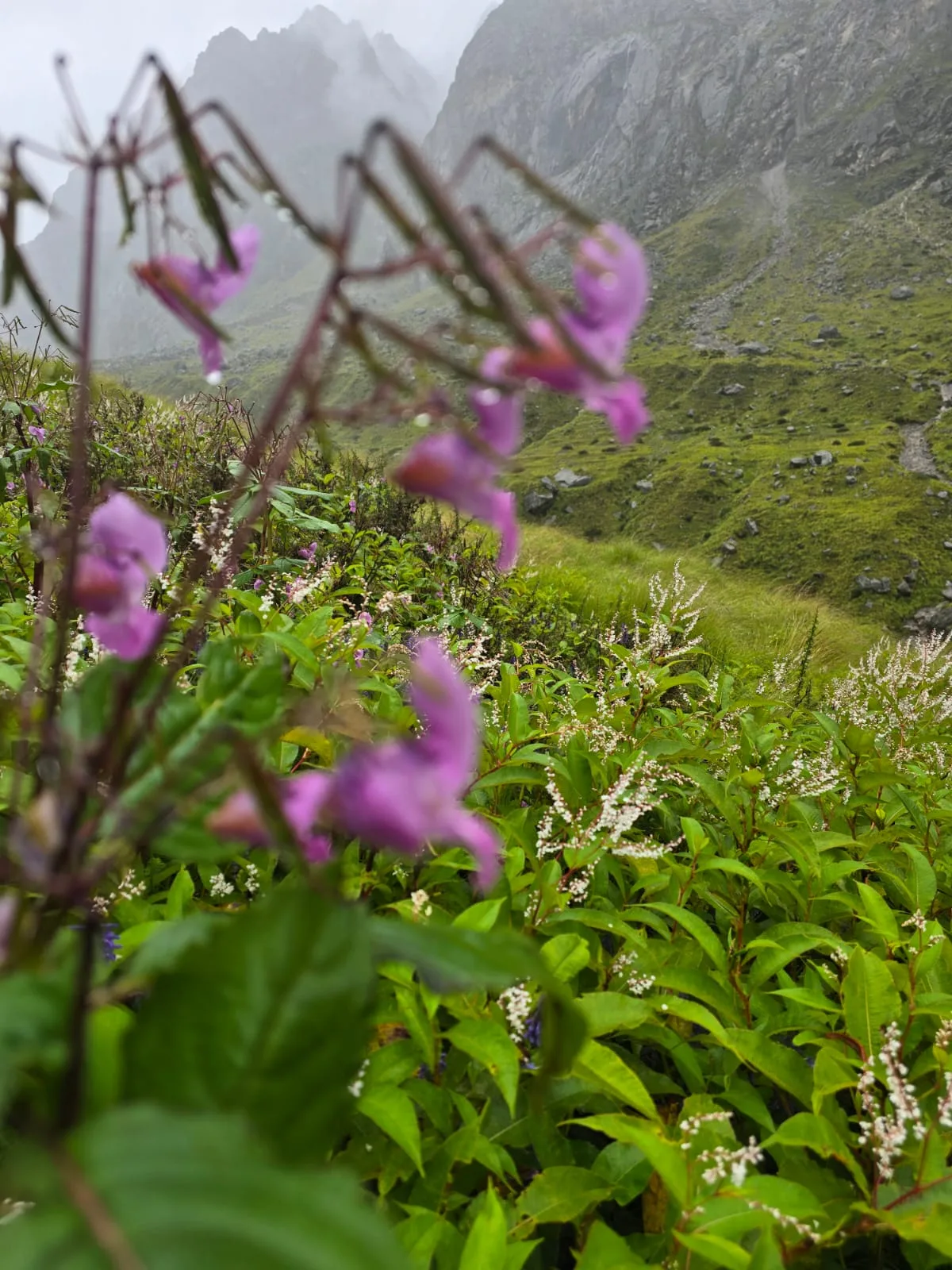
Himalayan Balsam in deep pink and magenta, carpeting entire sections of the valley floor
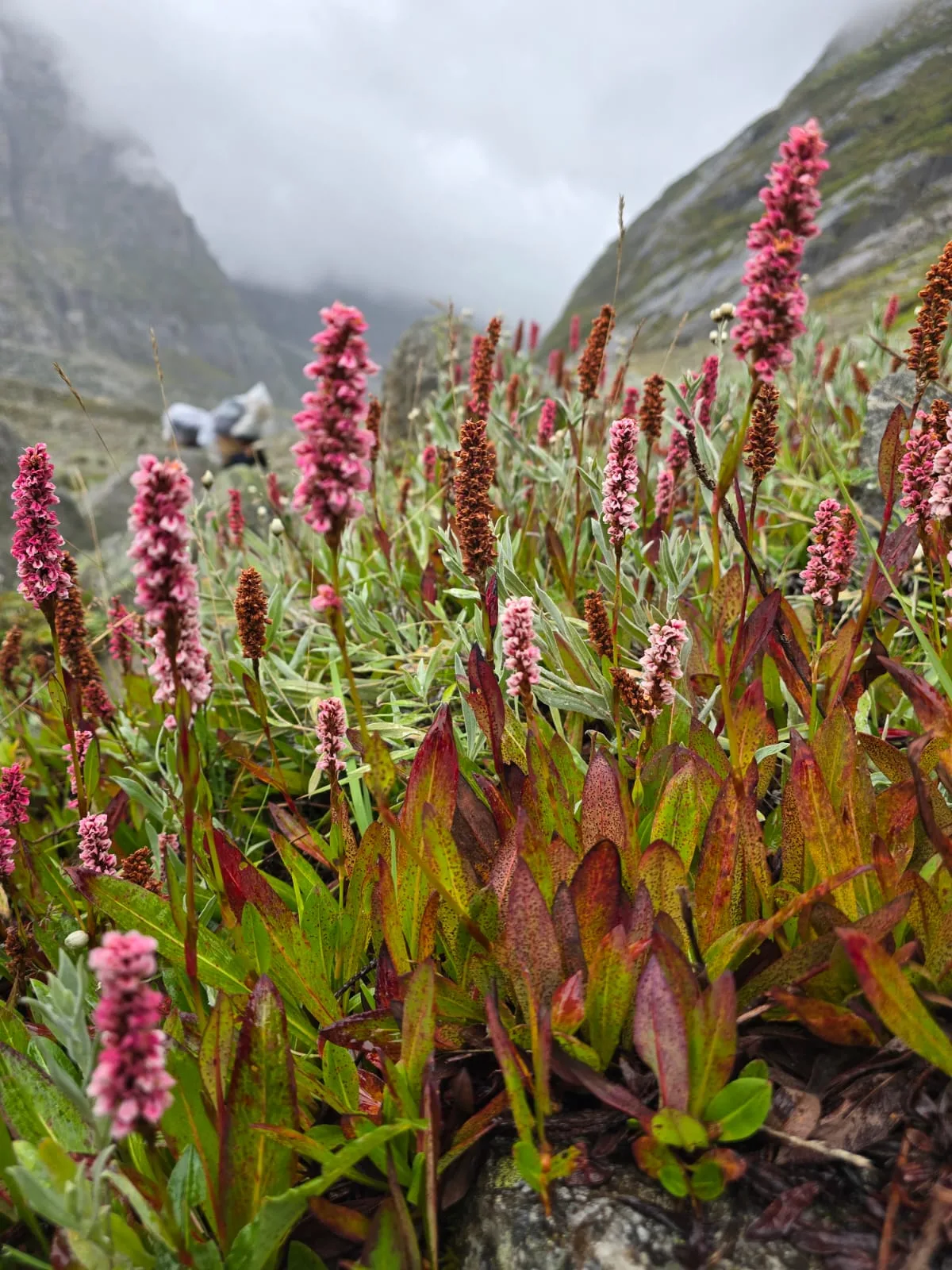
Bistorta in soft pink spikes
Ligularia in bright yellow
Dactylorhiza — a terrestrial orchid that appears in scattered clusters
Polygonum species in white and pink
Trollius or Globe Flower in golden yellow
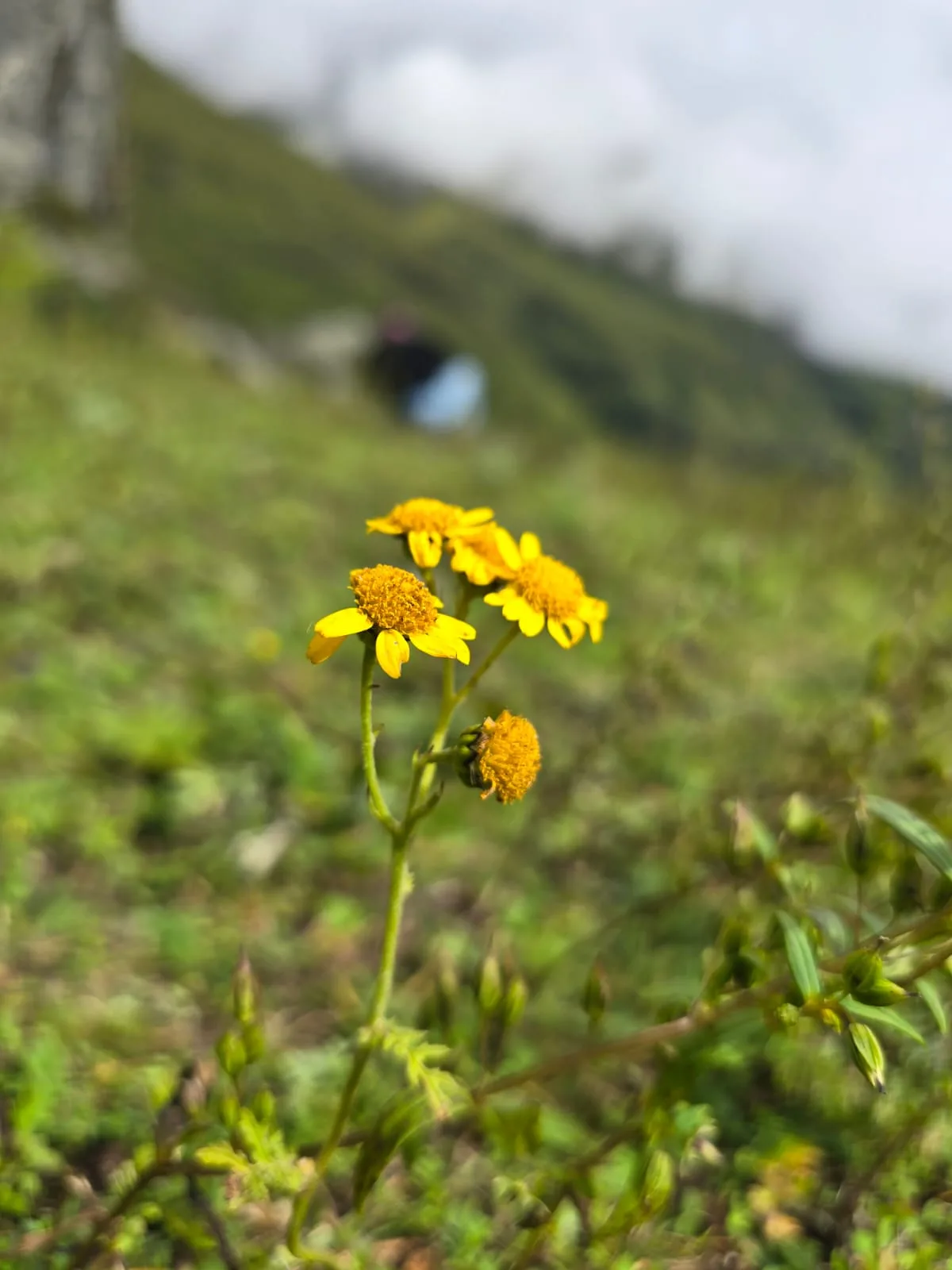
Inula and Senecio species in various yellows
Swertia in pale blue-white
Pedicularis in red and purple
The Himalayan Blue Poppy deserves a specific mention. It's real, it's here, and it's one of the most visually striking wildflowers in the world — a saturated, impossible blue that looks digitally enhanced until you're crouching in front of one.
Peak Blue Poppy visibility is typically the second and third weeks of July at lower valley elevations and late July to early August higher up.
September: The Quiet Close
The monsoon begins its retreat in September, the blooms transition to seed heads and autumn colors, and the valley takes on a different quality — less spectacular in raw flower volume, but more intimate, more golden, and significantly less crowded. A September visit rewards those who value atmosphere over peak bloom density.
2026 Seasonal Guide: When to Visit the Valley of Flowers
The Valley's Open Window: June to October
The Valley of Flowers National Park is officially closed from October to May. Snow makes the trail impassable and the Forest Department prohibits entry to allow ecosystem recovery. This isn't a guideline — it's enforced.
The park opens annually around the first week of June (exact dates vary by snow conditions and are announced by the Uttarakhand Forest Department) and closes around October 31st.
June (Early Season): Before the Crowds, Before the Blooms
Who It's For: Off-season explorers, trekkers who prioritize solitude over spectacle
Early June offers the trail largely to yourself — which is genuinely valuable. Snow lingers at higher elevations, the Pushpawati River runs high and fast with snowmelt, and the lower meadow sections carry early wildflowers. The full bloom hasn't arrived, but the landscape is alive in a different, greener, quieter way.
Honest Note: If your primary motivation is the flower carpet, June is too early. If your motivation is the mountains, the trail, and the experience without the July crowds, June is excellent.
Temperatures: 8°C to 20°C in valley; 2°C to 12°C at Ghangaria
Crowd Level: Low
July to August: Peak Season — The Reason This Valley Is Famous
Who It's For: Everyone who wants to see the Valley of Flowers as it's meant to be seen
There's no diplomatically softened way to say this: if you want the Valley of Flowers experience, you come in July or August. The monsoon rains that make the trail slippery and the leeches active are the same mechanism that creates the floral spectacle. You cannot have one without the other.
The trade-off is crowds — particularly in the last two weeks of July and first two weeks of August, which represent the single busiest period on the trail. In 2026, the Forest Department limits daily entries into the valley to manage ecological impact, which means arriving early at the park gate (open from 7AM) genuinely matters.
What Nobody Tells You: The morning window between 7AM and 11AM typically offers clear skies before afternoon monsoon clouds build. The valley looks dramatically different — and photographs far better — in morning light than under the flat grey of a cloudy afternoon.
Temperatures: 10°C to 18°C in valley; 8°C to 14°C at Ghangaria
Crowd Level: High in peak window; plan and book accordingly
September to Mid-October: The Underrated Close
Who It's For: Autumn trekkers, those combining with Hemkund Sahib pilgrimage, photographers seeking mountain clarity
The monsoon departure in September triggers a shift in what the valley offers. The flower carpet transitions to a tapestry of seed heads, autumn grasses, and the occasional late-blooming species. Mountain views — obscured through much of the monsoon — return with startling clarity as the atmosphere clears.
October in particular offers a combination of clear mountain panoramas, comfortable temperatures, and dramatically reduced crowds that many experienced trekkers argue makes it the valley's best-kept seasonal secret.
Temperatures: 5°C to 15°C (September); -2°C to 10°C (October)
Crowd Level: Moderate in September, Low in October
How to Reach the Valley of Flowers: Complete Route Guide
The Journey in Full
Reaching the Valley of Flowers requires combining motorized transport with trekking — there is no shortcut, and the trek component is non-negotiable. Here's the complete route:
Delhi → Rishikesh/Haridwar → Joshimath → Govindghat → Ghangaria → Valley of Flowers
Stage One: Getting to Govindghat
By Air:
Jolly Grant Airport in Dehradun is the closest airport (~265 km from Govindghat). In 2026, daily flights connect Dehradun with Delhi (45 minutes), Mumbai (2 hours), Bengaluru (2.5 hours), and several other major cities via IndiGo, Air India, and Akasa Air.
From Dehradun airport, the drive to Govindghat takes approximately 8–10 hours via Rishikesh, Devprayag, Rudraprayag, Karnaprayag, Chamoli, and Joshimath. The road follows the Alaknanda valley — one of the more scenically dramatic road journeys in Uttarakhand.
By Train:
Rishikesh (253 km from Govindghat) and Haridwar (277 km) are the nearest functioning rail heads. Both connect well with Delhi (Yog Nagari Express, Jan Shatabdi) and other major cities. From Rishikesh or Haridwar, shared taxis and GMOU buses operate to Joshimath and Govindghat.
By Road from Delhi:
- Bus: ISBT Kashmere Gate operates overnight services to Joshimath and Badrinath (for Char Dham season). Journey time: 12–14 hours.
- Self-Drive: Delhi → Haridwar → Rishikesh → Devprayag → Rudraprayag → Karnaprayag → Nandprayag → Chamoli → Joshimath → Govindghat. Total: approximately 500 km, 12–14 hours depending on road conditions and stops
Important Road Note: The Joshimath region has experienced ongoing land subsidence issues since 2023. Road conditions and specific route diversions should be verified with local transport operators before travel — the Chamoli District disaster management portal provides updated road status advisories.
Permits and Entry: Regulatory Reality
The Valley of Flowers operates under a structured permit system that has become more rigorously enforced in recent years.
Entry Permit: Issued by the Forest Department checkpost at the valley entrance (Ghangaria side). As of 2026, the permit fee structure is:
- Indian nationals: ₹150 per person per day
- Foreign nationals: ₹600 per person per day
- Camera fees apply separately for professional equipment
- Entry hours: 7:00 AM to 5:00 PM (last entry 2:00 PM to ensure exit before closing)
- Daily Entry Cap: The Forest Department has implemented daily visitor limits to protect the ecosystem. During peak season (late July – mid-August), these caps can be reached by mid-morning. Arrive at the checkpost early.
Additional Requirements:
- Valid government photo ID (Aadhaar, Passport, Driving License)
- Travel insurance covering high-altitude trekking (increasingly standard requirement)
- Registration at Joshimath or Govindghat for the Nanda Devi Biosphere Reserve entry
Photography at the Valley of Flowers: Practical Guide
The valley is, without question, one of the most photographically rewarding landscapes in Asia. But getting genuinely great images here requires specific preparation.
The Light Problem: The valley runs roughly east-west, which means direct sunlight reaches the valley floor only during morning hours. By late morning, the surrounding ridges cast shadows across sections of the meadow, and by early afternoon the monsoon clouds typically arrive. The golden shooting window is 7:30AM to 10:30AM.
The Weather Problem: Clear skies are the exception, not the rule, during peak bloom season. The same monsoon weather that creates the flowers creates persistent cloud cover. Build flexibility into your valley visit — a two-day approach (spending two nights at Ghangaria) gives you two shots at clear morning light rather than one.
Gear for the Valley:
- A macro or close-focus lens is genuinely worthwhile here — the individual flower detail is extraordinary
- Bring lens rain covers — monsoon mist and light rain are daily realities
- Polarizing filter for managing the intense greens and saturated colors
- Wide-angle for valley-scale compositions with peak backgrounds
- Drone Restriction: Drones are prohibited inside Valley of Flowers National Park. This is strictly enforced. Do not bring one expecting to use it.
Physical Preparation: What the Combined Trek Actually Demands
The combined Valley of Flowers and Hemkund Sahib trek is more physically demanding than its individual components suggest when read in isolation.
The Valley of Flowers component — the 14 km Govindghat to Ghangaria approach plus the 4 km valley walk — is manageable for most reasonably fit individuals. But Hemkund Sahib is different. The 1,280-meter elevation gain from Ghangaria to the gurudwara on top of already accumulated trek fatigue is a genuine physical challenge.
Recommended Pre-Trek Preparation:
4–6 weeks of cardiovascular training (running, cycling, stair climbing) before the trek
At least two sessions of sustained uphill walking per week in the month before departure
Altitude acclimatization at Joshimath (1,890m) for 1–2 nights before beginning the trek
Consult your doctor about Diamox (acetazolamide) if you have any history of altitude sensitivity
Medical Considerations:
Individuals with cardiac conditions should consult a cardiologist specifically before attempting Hemkund Sahib
A Pulse oximeter (inexpensive and widely available) is genuinely useful for monitoring oxygen saturation at altitude
Medical assistance is available at Ghangaria; the nearest hospital is in Joshimath.
The Ecological Reality
The Valley of Flowers receives significant pressure from the combination of its own visitor numbers and the enormous pilgrimage traffic to Hemkund Sahib that shares its approach trail. In 2026, the Forest Department's management approach reflects a genuine tension between ecological preservation and the economic and spiritual significance of keeping both destinations accessible.
What You Can Do:
- Carry all waste out of the valley — including food waste and packaging
- Stay on marked trails inside the national park — the meadow ecosystem is far more fragile than it appears
- Do not pick flowers. This sounds obvious. People still do it.
- Do not disturb nesting birds or wildlife — the valley is habitat for Snow Leopard, Himalayan Brown Bear, and numerous endangered bird species
- Use Ghangaria's waste collection facilities properly
- Buy from local vendors and hire local guides — the economic argument for community trekking is also an ecological one
- Respect the park's entry and exit times — they exist for ecological as well as safety reasons
Faq's
The 14 km trail from Govindghat to Ghangaria is demanding. However, the helicopter service (Govindghat to Ghangaria, approximately 8 minutes) makes the base camp accessible to those who cannot manage the full trail. From Ghangaria, the 4 km valley trail is manageable for most reasonably mobile visitors.
Yes, with a professional camera permit purchased at the valley entrance. DSLR and mirrorless systems are permitted; drones are not. How cold does it get at Hemkund Sahib? Even in peak July, temperatures at Hemkund (4,329m) can be near 0°C, with wind chill taking it lower. Carry a proper insulated layer regardless of how warm the lower valley feels.
The trail is maintained and generally safe, but rain makes sections slippery. Waterproof boots and trekking poles are important. Occasional brief trail closures due to rain damage can occur — check with local operators on the morning of your trek.
For July and early August, book accommodation at Ghangaria 4–6 weeks in advance. Good guesthouses fill up. The Forest Rest House books out even earlier.
Uttarakhand Aviation and approved private operators run helicopter services seasonally. In 2026, online booking through the Uttarakhand Helicopter Tourism portal is the standard process. Services are weather-dependent and cancellations are frequent — build buffer days into your itinerary.
Yes, absolutely. Hemkund Sahib, like all gurudwaras, welcomes visitors of every faith and background. Head covering and shoe removal are required. Langar is open to all.
The Valley of Flowers and Hemkund Sahib together constitute one of the most unusual experiences available to a traveler anywhere in the world — a journey that combines ecological rarity, aesthetic spectacle, and genuine spiritual weight in a single continuous itinerary. In a travel landscape increasingly dominated by manufactured experiences and algorithm-optimized destinations, this corner of Uttarakhand offers something increasingly rare: a place that is exactly what it claims to be. The flowers are real. The silence is real. The devotion you'll witness on the Hemkund trail is real in ways that bypass whatever your relationship to religion happens to be. Go for Valley of Flowers and Hemkund Sahib trekking expedition while the regulations are working, while the infrastructure is functional but not sanitized, while the local communities are still the primary economic beneficiaries of the tourism it generates. Some places don't stay the same forever. This one is worth experiencing before it changes. Plan your Valley of Flowers and Hemkund Sahib journey today. Connect with registered local operators in Joshimath, Rishikesh, or Dehradun for customized itineraries, advance permit assistance, helicopter bookings, and homestay reservations tailored to your travel dates and group requirements.
Cancellation Policy
30 - ∞ Days
25% Deduction
15 - 29 Days
50% Deduction
0 - 15 Days
100% Deduction